You have decided to run ads on your podcast. The harder question is not whether, but where. The same thirty-second spot can earn very different money, and cost you very different goodwill, depending on whether it opens the episode, sits in the middle or closes it out.
This guide explains the three standard ad slots, what each one pays, how many ads an episode can carry before listeners start leaving, and how to place them cleanly with markers. By the end you will know which slot to sell first and why.
Where do podcast ads go?
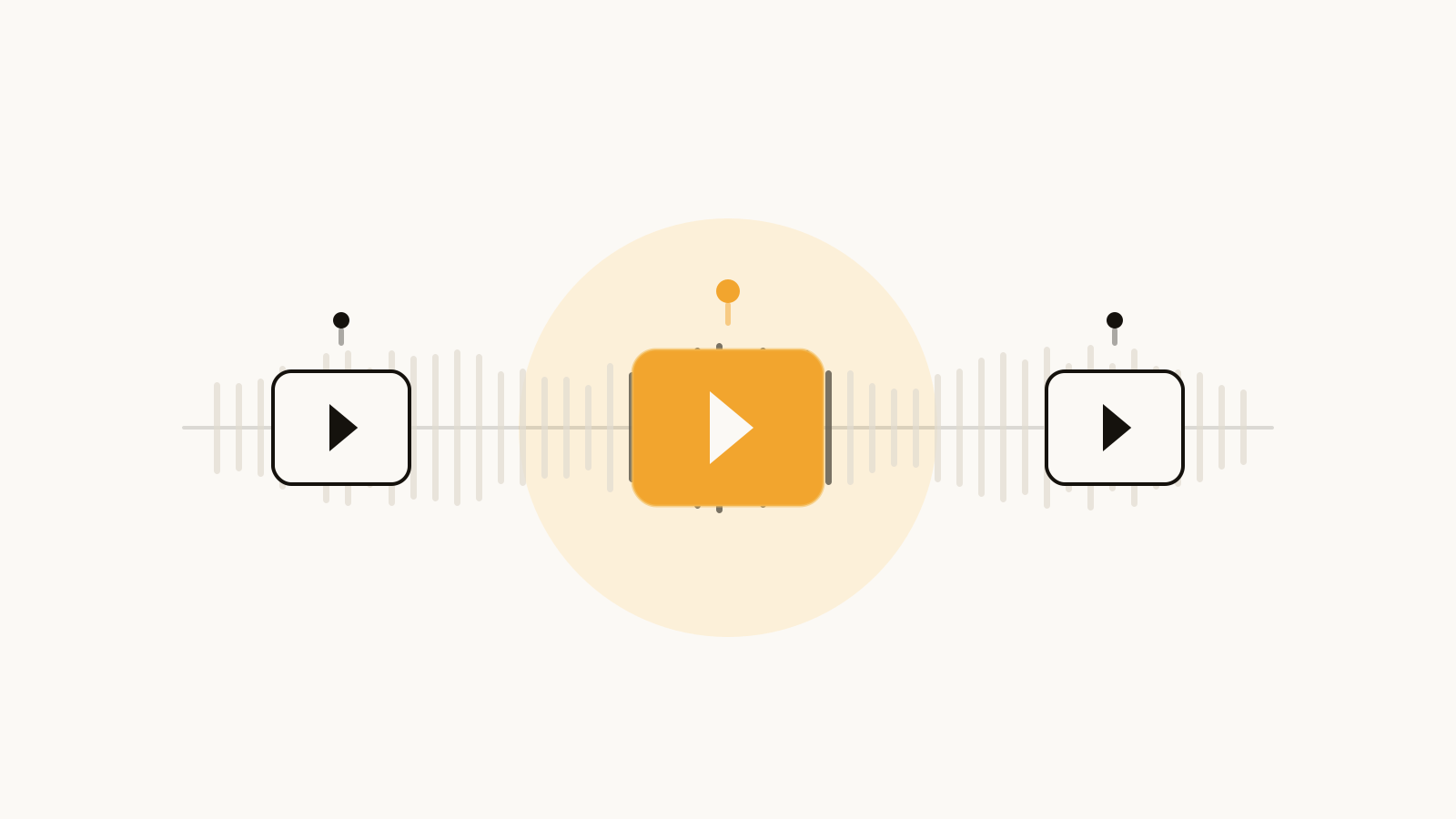
Podcast ads go in one of three positions: pre-roll at the start, mid-roll somewhere in the middle, and post-roll at the end. Each one is a slot you mark in the episode, and dynamic ad insertion fills it at the moment a listener presses play. The slot you choose decides two things at once: how many people hear the ad, and how much an advertiser will pay for it.
Pre-roll, the opener
Pre-roll plays before the content starts. Almost everyone who downloaded the episode hears it, so reach is at its highest. Attention is still warming up, though, so this is the slot for a short, punchy brand message rather than a detailed pitch.
Mid-roll, the money slot
Mid-roll plays partway through, ideally at a natural pause. A listener who has reached the middle is engaged and unlikely to bail, which is exactly why this slot carries the highest value. It suits your main sponsor, a real offer, or anything that needs a few seconds of genuine attention.
Post-roll, the closer
Post-roll plays after the content ends. Some listeners drop off before it, so reach is smaller, but the people who stay are your most loyal. It is cheap inventory that works well for a secondary call to action, a house promo for your own newsletter, or a plug for next week.
What does each slot pay?
Placement is the single biggest lever on what a podcast ad earns, ahead of genre or even audience size. The table below shows typical 2026 CPM ranges (the price per thousand listens) by slot, drawn from industry benchmark data.
| Slot | Typical CPM (2026) | Reach | Best for |
|---|---|---|---|
| Pre-roll | $18 to $25 | Highest, nobody has dropped off | Short brand messages, awareness |
| Mid-roll | $25 to $50 | The engaged core of your audience | The main money slot: sponsors and offers |
| Post-roll | $15 to $20 | Smaller, some listeners leave first | Secondary call to action, house promo |
Mid-roll commands a premium of roughly 70 to 100 percent over pre-roll, according to industry benchmark data (Magellan AI, Q1 2026). The reason is completion: mid-roll spots are heard through to the end far more often than pre-roll, because the listener has already chosen to stay. For the full picture of rates by genre and show size, see our guide to podcast CPM rates in 2026.
One thing the table cannot show is that a host-read spot in any slot outperforms a generic produced ad. Authenticity converts, so if you can read the mid-roll yourself, that premium climbs higher still.
How many ads is too many?
Every ad you add lifts revenue on paper and shaves a little off completion in practice. The job is to find the line where one more slot costs you more in lost listeners than it earns. For most shows that line sits lower than you would guess.
A workable rule of thumb is one ad slot per ten minutes of content, with slots spaced a few minutes apart so two ads never collide. A 30 minute episode comfortably carries three: a pre-roll, one mid-roll and a post-roll. An hour-long interview can take two mid-rolls without strain, as long as each sits at a real break in the conversation.
📋 A clean ad layout for a 30 minute episode
- Pre-roll at 0:00, kept short so the show starts fast
- One mid-roll around the halfway mark, dropped at a natural pause
- Post-roll after the outro, for a softer second message
- At least a few minutes between any two slots
- No two ads back to back, ever
The placement, not the count, is what listeners react to. A mid-roll that lands mid-sentence feels like an interruption, while the same ad at the end of a thought barely registers. Mark your slots where the conversation breathes, and you keep the revenue without spending the goodwill.
How do you place ads with markers in Springcast?
Springcast uses self-serve dynamic ad insertion, so you place the slots yourself, with no ad network and no minimum download threshold to clear first. You mark each position (pre-roll, mid-roll, post-roll) on the episode, upload your own audio, and launch a campaign with a CPM and a budget cap so spend never runs away from you.
Because the ad lives separately from the episode, marking a slot does not touch your original audio, and you can change or remove the campaign across every episode from one screen. To understand the mechanism in depth, read our explainer on dynamic ad insertion, and for where ads sit in the bigger revenue picture, the guide on how to monetize a podcast.
Targeting stays privacy-first: ads can be aimed at country level only, with no device fingerprinting and no personal listener profiles, which matters more every year for European audiences. The wider kit for growing and earning from a show sits in the podcast growth tools, and you can see exactly which slots and listens are counted on the podcast analytics page.
Pre-roll buys reach, mid-roll buys revenue, and the gap between them is decided at the marker.
Frequently asked questions
Place the slot before you fill it
Where an ad sits is the cheapest decision you can get right. Open with a short pre-roll, put your real sponsor in a mid-roll at a natural break, and keep a post-roll for a softer ask. Space them out, never stack them, and your show earns more without asking anything extra of the listener. Mark your first slots on the Springcast hosting platform and launch a campaign when you are ready.